You don’t lack self-confidence; you lack a healthy lifestyle, proof of your own capability, and the right mindset
In this post, we will explore these three truths: how your biology plays a role, why confidence is not permanent, and how your mindset determines its strength, along with three practical steps to build it
Truth number one: Biology plays a part in self-confidence
It’s much harder to feel confident when your nervous system is dysregulated, you have a messed-up sleep schedule, high stress levels, and an inability to regulate your emotions
Your brain has a prefrontal cortex, which is responsible for critical thinking, remaining calm, and making smart decisions
Another part is the amygdala, which is your brain’s threat center
When you are deprived of sleep, your amygdala hijacks your brain and disconnects the prefrontal cortex from the amygdala.
When it becomes hyperreactive, it perceives small tasks or challenges as a threat, like giving a presentation
Your cortisol levels follow a daily rhythm. When your amygdala is on high alert, it sends signals to release more cortisol (stress hormones)
This leads your body into chronic stress; therefore, your brain will not feel safe, and your sympathetic nervous system will come online
This will make your blood pressure, heart rate, and alertness stay high, making it hard to relax
When you are in “fight or flight” mode, your body is trying to survive, and you won’t be able to regulate your emotions
Chronic high stress also affects serotonin and dopamine, which play a role in mood regulation
Truth Number Two: Self-confidence is not permanent
Confidence naturally fluctuates; depending on the situation, your stress levels, your environment, or whether you’re doing something new.
Even the most confident person doesn’t feel confident all the time
For example, you could be confident in your cooking skills but insecure in your writing skills
You could be a professional public speaker but lack in your athletic abilities
confidence thrives in a familiar zone, when you come across new challenges, goals, or a new job, you will naturally feel insecure or a bit anxious because it’s out of your competence zone
While confidence naturally feels strongest in familiar situations, real long-term confidence is built by stepping into new ones.
Truth Number Three: Self-confidence depends on how you think about growth
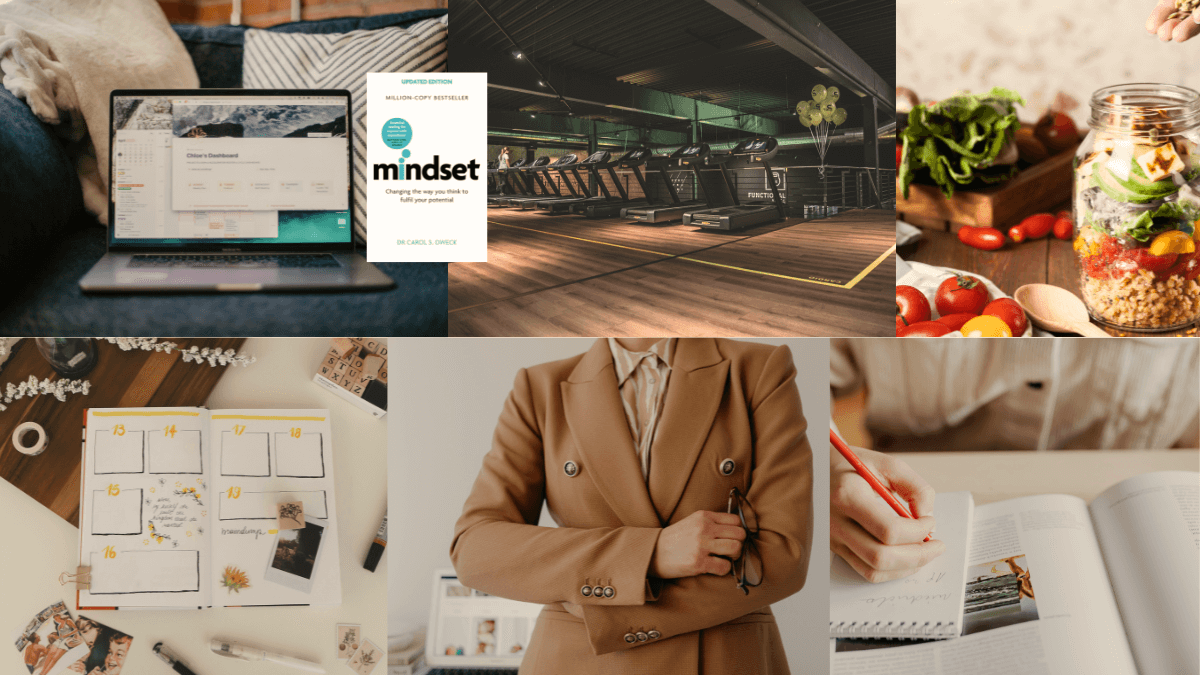
Dr Carol Dweck’s book Mindset reveals that success isn’t about talent, it’s about your belief in whether your abilities are fixed or can be developed
She calls it the growth vs fixed mindset
The fixed mindset is the belief that your innate abilities or talents are fixed and limited, and that’s that
confidence in a fixed-minded person :
People with a fixed mindset usually feel confident only when things are going well.
If they fail or struggle, they take it personally and start believing they’re just not good enough.
They see effort as a sign that they lack talent, as if they have to try harder, which must mean they’re not naturally gifted.
And when someone gives them feedback, it feels like an attack instead of help.
Because of that, their self-confidence depends on everything going right, and the moment it doesn’t, it drops.
They often avoid new challenges just to protect that fragile feeling of being “good.”
The growth mindset is the belief that your basic skills can be developed through effort, strategies, and help from others
Confidence in a growth-minded person:
They see challenges as opportunities to learn, and they believe effort is the path to mastery. They see feedback as necessary data to improve their weak points
Their self-confidence comes from knowing they can figure this out, not that they have to be perfect right away.
That’s why their self-confidence feels steadier; they might still feel nervous, uncertain, or scared before trying something new, but deep down, they trust that they will learn this eventually
Three steps to build confidence
Step number one: Take care of yourself
Take care of the basics: sleep, nutrition, and workout
Set a sleeping schedule, be sure to get your 7-8 hours
For nutrition: start by adding more veggies or fruits, and drink more water gradually
Eat balanced meals at consistent times each day. Focus on creating a stable, healthy routine, not on making a drastic change all at once
Now this advice is a guideline, not a rigid rule. The goal is to find a personal rhythm that works for you.
For those with shifting schedules, like nurses, it’s less about eating at the same time and more about creating a consistent pattern within your day
like having your meals a certain number of hours apart, once you’re awake and active
For workout: you don’t have to go to the gym, walking is the most underrated effective workout out there, you can use the Japanese interval walking technique
Basically, 3 minutes of slow walking, then 3 minutes of brisk walking, repeat 5 times for a total of thirty minutes
Do workouts at home; YouTube is full of tutorials
cardio: If you’re looking for great low-impact workouts, I highly recommend the Body Project YouTube channel.
They offer sustainable workouts that still provide a challenge. Their standing cardio sessions are personally my favorite
Pilates: Madeliene Abeid’s YouTube channel has a one-week and one-month pilates plan
Zumba, or whatever you like, as long as it is suitable and sustainable
other recommendations for fitness/nutrition youtubers:
Remember: any movement is a good movement
Step number two: build a portfolio of proof
A portfolio of proof is a collection of memories of overcoming nervousness, fear, or anxiety,
They are Evidence to show that you can handle new challenges. It’s a way to fight against self-doubt
The more you accomplish, the more you’ll believe in yourself.
Don’t wait for big wins
Your portfolio of evidence doesn’t have to be a collection of big wins only, like a promotion or mastering a new skill; it could be:
- speaking up in a meeting
- saying no
- posting your first-ever blog, YouTube video, or any creative work online
- figuring out how to use a new tool by yourself ( for me, it was using WordPress for the first time, sure, it was overwhelming )
- staying consistent through hard times
- Trying again after giving up
- moving forward even when progress feels slow
- finishing something after procrastinating for weeks
- recovering from a rejection or failure
All of these are proof of: when you fall, you always return stronger, you can do uncomfortable things and survive the anxiety that comes with it, you can learn new things, starting from zero
Document it, whether in a physical journal or notes app
Add the date, what you did, what you felt, the lesson, or proof
It doesn’t have to be daily
Review them whenever you feel self-doubt, showing your inner critic evidence that you have done difficult things and will do them again
Step number three: Cultivate a growth mindset
First, answer these prompts to see if you lean towards a fixed or a growth mindset
- When faced with a difficult new task, is your first thought “What if I fail?” or “I’m not good at this”?
- When you hit an obstacle, is your first instinct to give up, believing your abilities are insufficient?
- Do you believe that if you’re truly talented at something, you shouldn’t have to work hard at it?
- After a failure, do you find yourself thinking “I’m a failure” rather than “I failed this time”?
- When a peer succeeds, does it make you feel insecure or jealous instead of inspired?
- Do you frequently avoid tasks you’re not immediately good at, instead of saying “I can’t do this yet“?
- When given constructive criticism, do you get defensive and take it as a personal attack?
- Do you often compare your skills to others to see if you’re “naturally” better or worse?
- Is your primary focus on proving your intelligence/talent (the result) rather than on improving and learning (the process)?
- Do you strongly prefer to stick to tasks you know you can excel at, avoiding the risk of looking foolish?
If you have a growth mindset, Good for you! But if you don’t, here are the steps to cultivate it :
Learn to listen to your fixed mindset when it’s online.
What triggered it? Usually, it’s fear of judgment, comparison, or past failures.
“I can’t do it “, “I am not good at this”, “What if I fail?” “People will judge me.”
Embrace your fixed mindset, do not resist it, give it a name like Sharon or Karen
When it comes online, “Oh great, Karen is being annoying again.”
Talk back with a growth mindset
“This is a chance to learn.”
“Mistakes help me improve.”
“effort is the path to mastery”
Use the word yet in self-limiting statements
“I don’t understand it yet.“
“I haven’t mastered this yet.”
“I can’t do it yet.”
Commit to growth-oriented actions
Set small achievable goals that stretch your abilities, like: improving a personal habit or learning a new skill or language
Focus on incremental improvement every day
Reflect on what went well each day and areas for improvement
Be willing to be a beginner; it sucks before it gets better.
celebrate process, not outcomes
The process and the effort are what make it meaningful
Praise yourself and others for hard work, persistence, and resilience
Practice self-compassion and patience because it takes time. Your goal is not to eliminate a fixed mindset, but instead to recognize it and choose growth instead
Check for more on my mindset book summary Pinterest board
Self-confidence is a cycle. The real goal is to trust your ability to rebuild it every time it fades